

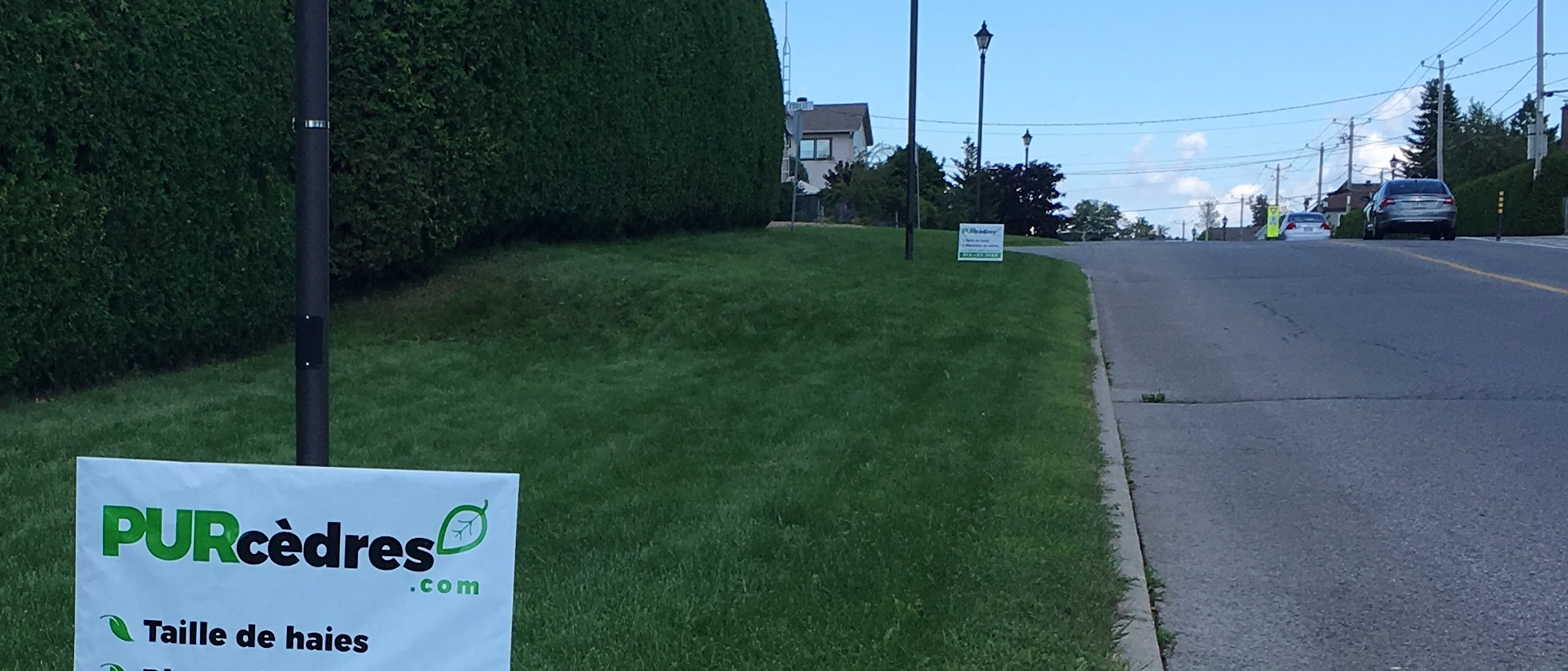
Thuja occidentalis, a vulnerable plant that must be protected
Thuja occidentalis, cedar or more commonly cedar hedge is a plant of choice in urban areas. Mainly used as a vegetative screen or as a property demarcation, the cedar hedge can also encounter problems with pests.
A pest is an insect, mite, or infectious disease such as viruses, bacteria, fungi, and mycoplasma. In general, a pest will "attack" a plant, and therefore feed on it, when it is weakened by one or more factors that predispose it to dieback. This natural balance, i.e. systematically attacking the weakest, is however destabilized during epidemics.
Why are there problems in the cedar hedge?
A tree, or a cedar hedge, weakened by one or more factors that predispose it to dieback, will after a certain time expose visible symptoms; discoloured leaves, dead branches, loss of leaf mass, etc. It is therefore necessary to start by offering the ideal environmental conditions for your hedge to avoid predisposition to external harmful factors. Never have a pest treated without first solving the problems related to the proper fundamental development of your cedar hedge, air, water and nutrients
Who and what are the pest problems?
There are spider mites, which are small red spider mites that feed on the sap of the foliage, drying out its leaf mass. In times of infestation, a fable impact or biopestide miticide will be effective.
Thuja leafminers are the larvae of a minor insect that feeds on the contents of the leaves of your hedge, drying out its leaf mass. In times of infestation, an insecticide with a fable impact or biopestide will be effective. There is also the Thuja weevil, bugs, Diprions and lecania, but these insects are not very problematic.
Poor irrigation often leads to the development of fungal diseases such as needle burn, phomopsian blight, grey mould which attack vegetative parts such as foliage, new shoots, flowers, etc.
As adults, cedars need sunlight throughout the day. In the event of a lack of sunlight, the foliage will lose its beautiful green colour and dry out. An excess of nitrogen, due to the maintenance of the turf surfaces, can also cause growth problems blackening the foliage of the lowest branches. It is normal for some pests to inevitably end up in your cedar hedges. Plants in good sanitary condition will be able to defend themselves naturally against these invasions. Like us, your hedge is constantly confronted with the problems that populate the environment