

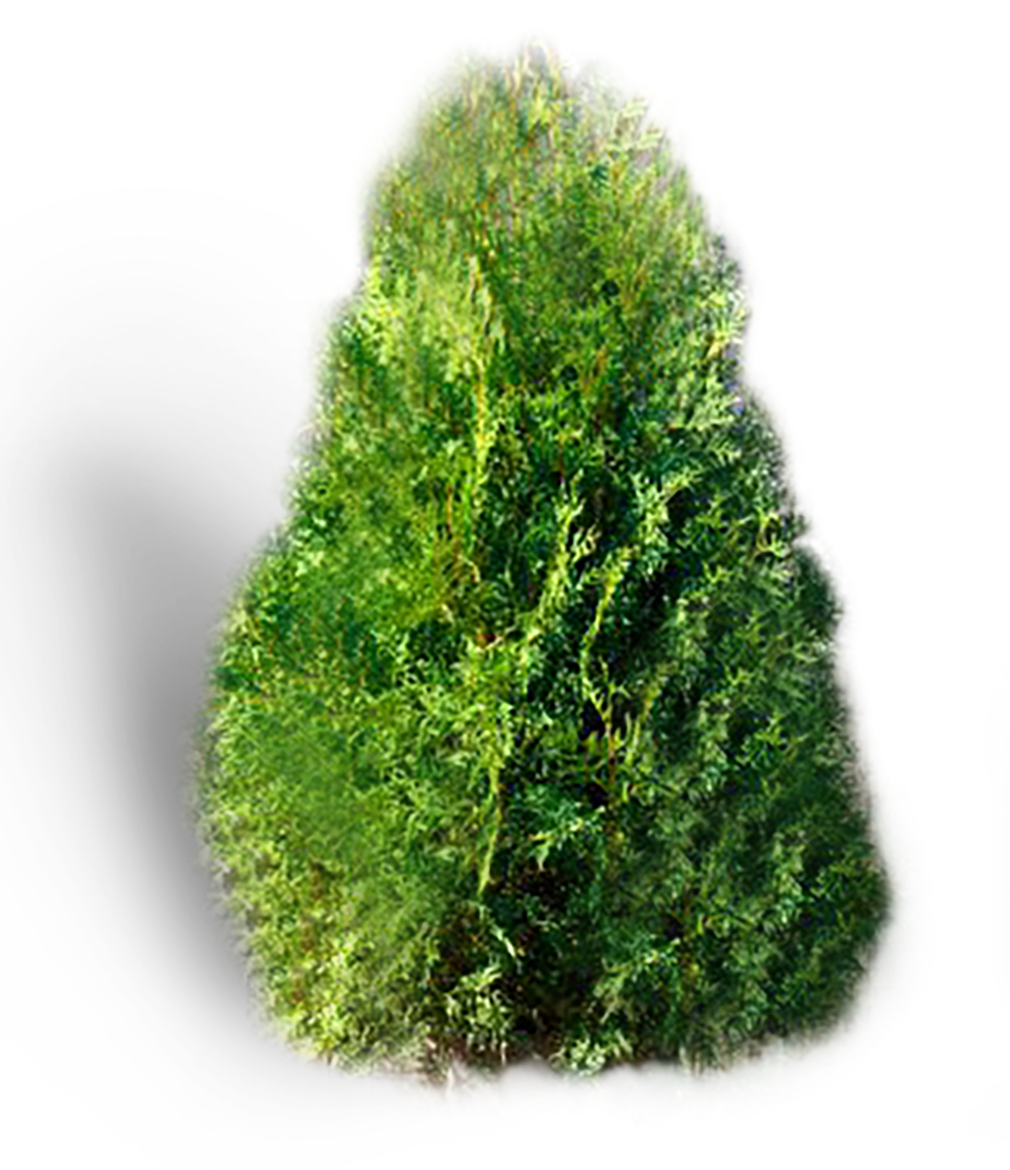
Black Cedar (Hedge Cedar)
Description of Thuja nigra
Thuja occidentalis 'Nigra', more commonly known as black cedar, is the preferred choice for those looking for a dense, green hedge all year round and easy to maintain. With darker, richer foliage than other cedar varieties, it offers added privacy while adding a touch of natural sobriety to your layout.
Its uniform growth, natural conical shape, and high pruning tolerance make black cedar a durable and aesthetically pleasing solution for residential, commercial, or institutional properties.
No payment required – for an estimate of your project
Characteristics of Black Cedar
- Latin name: Thuja occidentalis 'Nigra'
- Other names: Black cedar, dark cedar
- Shape: Normally trimmed in the shape of a hedge
- Maximum height: Approximately 16 to 20 feet
- Width at maturity: Approximately 5 to 6 feet
- Exhibition: Full sun to partial shade
- Hardiness: zone 3A down to -40°C
- Planting period: Spring, summer or autumn
- Installation: To create a dense hedge with white cedar, it is recommended to plant each shrub about 24 inches apart.
- Number of sizes per year: 1 (if required)



For a dense, sober hedge
et sans souci
BENEFITS CEDARS IN POTS:
Best transplant rework
Unlike cedars grown in the field, no roots are cut during transplanting. This will ensure a better recovery when planting your cedars
Faster growth
Thanks to the better recovery of potted cedars, you will benefit from considerably faster growth in the first few years!
Much lighter cedar
A cedar grown in a pot will only be a fraction of the weight of a cedar grown in the field, so you won't have to work too hard for your setup
Easy to Dig and Install
Since the root system of a cedar grown in a pot is less voluminous than its counterpart grown in the field, it will be easier for you to excavate the land and install the cedars.