

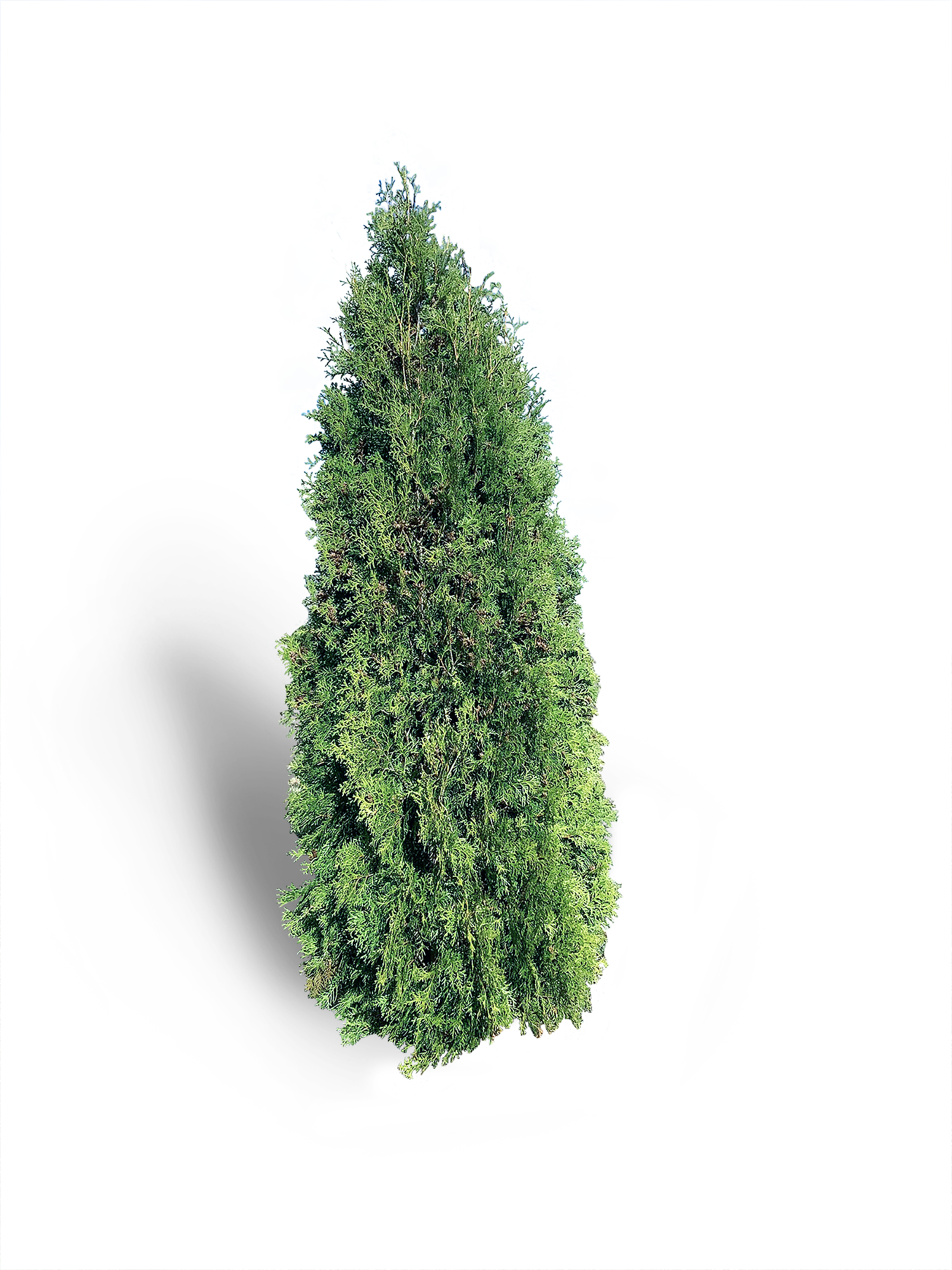
Brandon Cedar (Fastigiata)
Description of the "brandon" cedar
Brandon cedar (Thuja occidentalis 'Brandon') is a fastigiata variety, perfect for those who want a thin, straight and stylish hedge, without encroaching on space. With its naturally columnar shape, a maximum height of 20 feet and a width of approximately 3 feet, it blends harmoniously into modern layouts, narrow courtyards or residential entrances.
Discreet at the base, but impressive in its height and hold, Brandon cedar is ideal among cedar varieties to create a structured green fence that enhances your architecture. Thanks to its "fastigiated" habit, it keeps its silhouette straight effortlessly and tolerates pruning very well, making it a preferred choice for a clean, symmetrical and contemporary hedge.
No payment required – for an estimate of your project
Characteristics of Brandon Fastigiata Cedar
- Latin name: Thuja occidentalis 'Brandon'
- Other names: Brandon cedar, columnar cedar, eastern white cedar
- Shape: Fastigiate (naturally columnar shape)
- Maximum height : Approximately 20 feet
- Width at maturity : Around 3 feet
- Sizes available for purchase: 4 to 8 feet
- Exposure: Sunny to partial shade
- Hardiness : Zone 3B down to -37°C
- Planting period: Spring, summer or autumn
- Installation: To create a dense hedge with brandon cedar, it is recommended to plant each shrub about 24 inches apart.
- Number of prunings per year: 0 to 1 depending on the desired effect


For a straight, stylish and hassle-free hedge
BENEFITS CEDARS IN POTS:
Best transplant rework
Unlike cedars grown in the field, no roots are cut during transplanting. This will ensure a better recovery when planting your cedars
Faster growth
Thanks to the better recovery of potted cedars, you will benefit from considerably faster growth in the first few years!
Much lighter cedar
A cedar grown in a pot will only be a fraction of the weight of a cedar grown in the field, so you won't have to work too hard for your setup
Easy to Dig and Install
Since the root system of a cedar grown in a pot is less voluminous than its counterpart grown in the field, it will be easier for you to excavate the land and install the cedars.